Safe nest removal from eaves, sheds, and ground
Wasp & Hornet Nest Removal in Suffolk County, NY
A wasp or hornet nest close to a doorway, deck, or kids' play area isn't something to wait out until it goes away on its own, since colonies grow through the summer and defend aggressively once disturbed. We remove the nest directly and check the property for others you might not have spotted yet.
[ 01 ] Identification
Signs You Have Them
- Paper wasp, yellowjacket, bald-faced hornet
- May–Oct, peak Aug–Sept
- Yes — eaves, soffits, ground voids
- 20–45 min, nest removal included
- Keep area clear 24 hours
- 7 days, void re-check
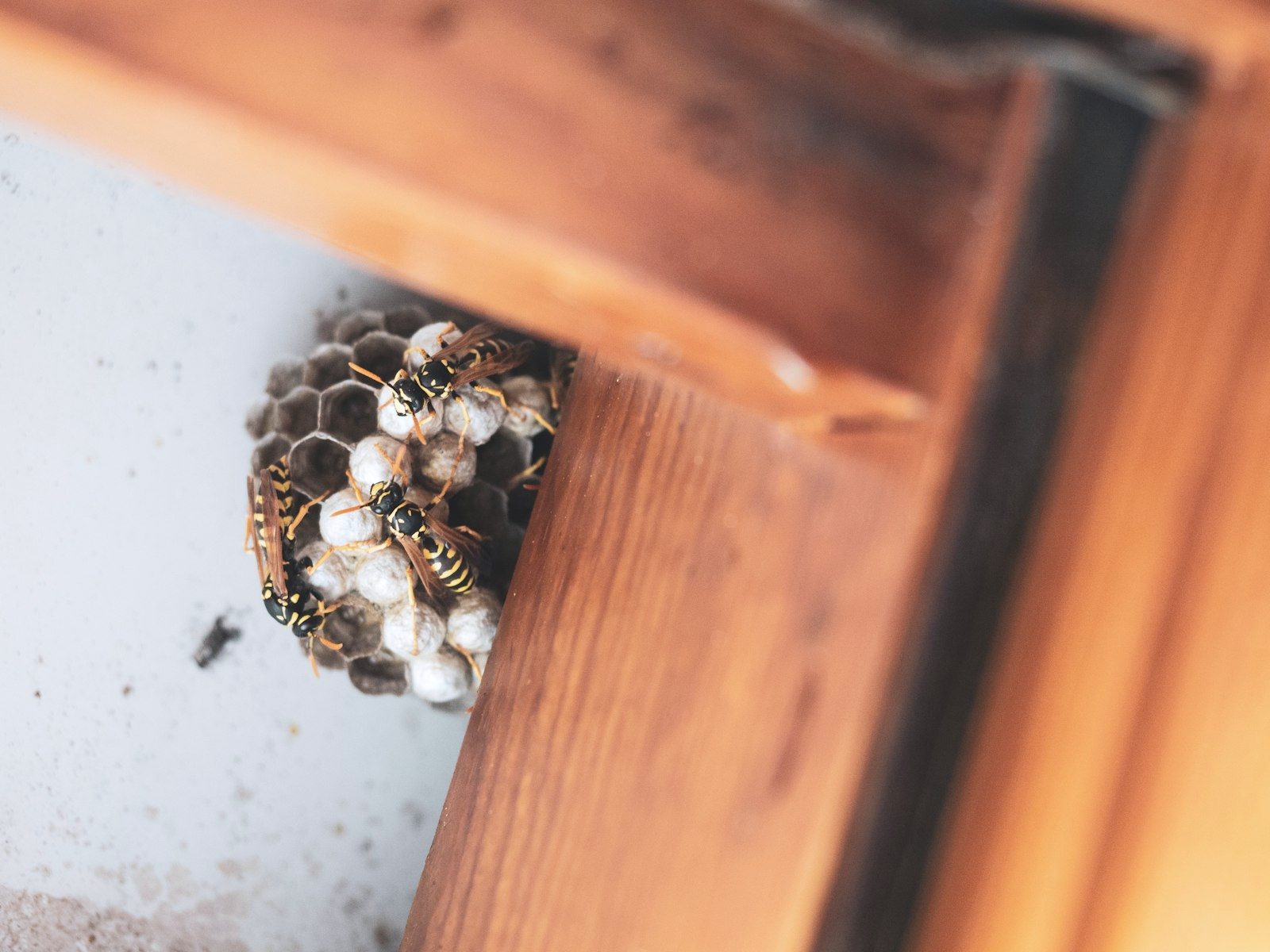
- A visible papery gray nest attached under an eave, deck railing, or inside a shed or garage rafter
- A noticeable increase in wasp or hornet activity concentrated around one specific spot on the exterior of the house
- A ground-level nest with wasps repeatedly entering and exiting a small hole, common with yellowjackets
- A large, football-shaped enclosed nest higher up in a tree or against the eave, typical of bald-faced hornets
- Wasps investigating gaps around siding, soffits, or attic vents as potential nesting sites in spring
- A sting incident occurring near a doorway, mailbox, or other high-traffic area, indicating a nest close to that path
[ 02 ] Our Approach
How We Treat Wasps & Hornets
Inspect
We locate the active nest and identify the species, since yellowjackets, paper wasps, and bald-faced hornets behave differently and some nest in the ground rather than above it. We also check the rest of the exterior for satellite nests, since it's common to find more than one when a property has multiple sheltered spots.
Plan
Based on nest location and species, we decide on the safest removal approach — some nests are treated and removed directly, while ground nests or larger hornet nests require a different method to avoid provoking a mass response. We time removal for early morning or evening when the colony is least active and most contained inside the nest.
Treat
We apply a direct treatment to eliminate the colony, then physically remove the nest structure once activity has stopped, using full protective equipment throughout. For nests in wall voids or hard-to-reach spots, we treat the void directly rather than trying to force removal, which reduces the chance of wasps escaping into the living space.
Prevent
We check nearby eaves, sheds, and soffit gaps for early signs of a new nest starting, since the same sheltered spots tend to attract new colonies the following season. Sealing small gaps in siding or soffits and treating known nesting spots proactively in spring cuts down on repeat nests significantly.
[ 03 ] Suffolk County
Why It Happens Here
Suffolk County's mix of wooded lots, sheds, decks, and older homes with roomy eaves gives wasps and hornets plenty of sheltered spots to build nests undisturbed through spring and early summer. Waterfront properties on the East End see a particular spike in yellowjacket activity in late summer, since these colonies grow largest by August and September and become far more aggressive defending the nest as the season winds down, right when outdoor entertaining and beach season activity are at their peak.
Ground-nesting yellowjackets are a common issue in yards with mulch beds, near woodpiles, or along the edges of wooded lots, and they're often not discovered until someone accidentally disturbs the nest while mowing or gardening. Because a ground nest can hold a much larger colony than people expect, and yellowjackets can sting repeatedly and recruit nestmates when disturbed, we treat any reported ground nest as a priority call rather than something to schedule out.
[ 04 ] Before We Arrive
How To Prepare
Nothing complicated. These few things let the technician spend the visit treating instead of moving furniture.
- Clear access to basements, crawlspaces, utility rooms and the exterior foundation line.
- Put pets in a separate room or outside for the duration of the visit.
- Have someone available who can point out where the activity has been seen.
- Keep people and pets away from the nest area until it's been treated — do not attempt to spray or disturb it yourself.
- Note the general location and, if safe to observe from a distance, roughly how many wasps you're seeing enter and exit.
Yes, waiting generally makes it worse. Wasp and hornet colonies grow throughout the season, and a nest that starts with a handful of wasps in May can hold hundreds by late summer, with the colony becoming noticeably more defensive as it grows. If the nest is anywhere near a doorway, walkway, or area where people or pets spend time, it's worth having it removed as soon as it's spotted.
Related Services
- Ant ControlTrails to food sources, sawdust piles, winged swarmers indoors
- Residential Pest ControlBugs in the kitchen, spiders in corners, ants along the baseboards
- Commercial Pest ControlActivity near loading docks, storage rooms, or customer complaints
Wasp & Hornet Nest Removal near you
Free Estimate
Get Wasps & Hornets Handled.
Free estimate, no obligation. A technician is dispatched within 24–48 hours, and same-day service is available for emergencies.
631.450.4455- 24–48 HRS
- SAME DAY