German Cockroaches vs. Water Bugs: Which One Is Actually In Your Kitchen
Not every roach-looking bug in your kitchen is a German cockroach infestation. Here's how to tell the difference and why it matters.
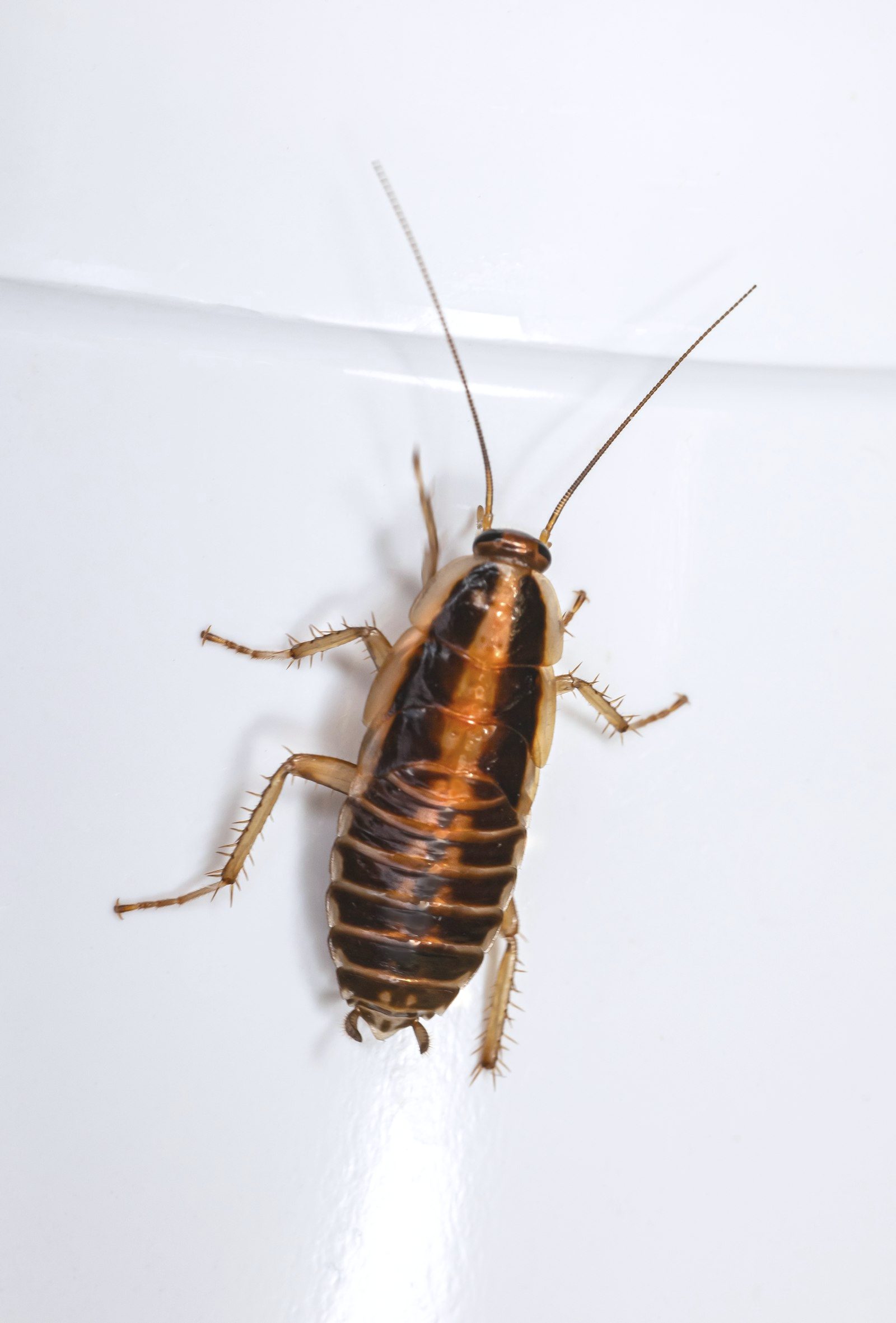
We get some version of this call constantly: a homeowner sees a large, dark, roach-looking bug in the basement or near a kitchen drain and wants to know if it's about to turn into a full infestation. The answer depends almost entirely on which insect they actually found, and the two most common culprits on Long Island, the German cockroach and what most people call a water bug (usually an Oriental cockroach, sometimes a large native wood roach that wandered in from outside), require completely different responses.
Telling Them Apart
German Cockroach
Small, tan to light brown, about half an inch to five-eighths of an inch long as an adult, with two dark parallel stripes running lengthwise just behind the head. They move fast, are attracted to warmth and moisture, and are almost never found outdoors, they live their entire life cycle indoors, typically within a few feet of a stable food and water source.
Water Bug (Oriental Cockroach)
Larger, an inch to an inch and a quarter long, glossy black to dark reddish-brown, with a heavier, rounder body. Adult males have wings that don't fully cover the abdomen; females have only wing pads and can't fly at all. Oriental cockroaches are drawn to damp, cool areas, floor drains, sump pumps, damp basements, mulch beds against the foundation, and they travel indoors from outside far more often than they establish a true indoor-only colony.
- Size and color: German roaches are small and tan with racing stripes; water bugs are large, dark, and glossy
- Speed: German roaches scatter fast when a light comes on; water bugs are noticeably slower and clumsier
- Location: German roaches cluster near kitchen appliances and cabinets; water bugs turn up near drains, sump pits, and basement floors
- Egg cases: German roach egg cases (ootheca) are small, tan, and often carried by the female until just before hatching; water bug egg cases are dark, larger, and usually dropped and hidden rather than carried
A single water bug in a basement after a heavy rain is a very different situation than three German roaches behind a refrigerator. One is often a one-time wanderer. The other is a population that's already established.
Why the Difference Changes the Whole Treatment Plan
German cockroaches reproduce fast, a single female can be responsible for tens of thousands of descendants over her lifespan under the right conditions, and once established indoors, they don't leave on their own. Because they hide in extremely tight cracks and crevices, behind outlet covers, inside the motor housing of a refrigerator, under the rubber gasket of a dishwasher, treatment has to target those harborage points directly with gel bait and crack-and-crevice application, not just general spraying of open surfaces, which mostly just scatters them into new hiding spots.
Oriental cockroaches, on the other hand, are largely an exclusion and moisture-management problem. Since they typically enter from outside through foundation cracks, gaps around pipes, and floor drains without proper trap seals, the more effective long-term fix is sealing those entry points and reducing the moisture and mulch conditions right outside the foundation that attract them in the first place. Baiting still plays a role, but it's paired with exterior perimeter treatment rather than deep interior harborage work.
Signs of an Established German Cockroach Infestation
By the time you're seeing German cockroaches during daylight hours, the population behind the walls and appliances is usually already significant, since they're naturally nocturnal and avoid light and open space when possible. A few other things worth checking:
- Small dark specks (fecal matter, resembling ground pepper or coffee grounds) along cabinet edges, behind appliances, or in drawer corners
- A persistent musty, oily odor in cabinets or pantries with no obvious source
- Egg casings or casing fragments in cracks near the stove, dishwasher, or refrigerator motor compartment
- Shed skins from nymph molting stages, translucent and roach-shaped, in the same tight spaces
Where They Come From in the First Place
German cockroaches almost always enter a home hitchhiking, in a cardboard box, a delivered appliance, a bag of recycling, or secondhand furniture, rather than walking in from outside like an Oriental cockroach does. This is why an infestation can show up seemingly overnight in a home that never had a problem before, and it's also why treating just one unit in a multi-family building or attached townhouse often isn't enough if neighboring units have an active population that keeps migrating back through shared wall voids and plumbing chases.
Suffolk County's mix of older multi-family housing, basement apartments, and homes with damp crawlspaces near the water table gives both species plenty of opportunity throughout the year, though we see Oriental cockroach calls climb noticeably after heavy rain events and German cockroach calls stay fairly constant year-round since they live entirely indoors regardless of season.
If you're not sure which one you're dealing with, a photo is usually enough for us to tell over the phone, and from there we can put together a targeted plan rather than a generic spray treatment that won't address the actual problem. NOFO Pest Control serves all of Suffolk County with free estimates and 24 to 48 hour response.